Categories
Apple Pro Apps

Final Cut Studio 4: The Inside Scoop (from MacSoda)

Final Cut Studio 4: The Inside Scoop http://bit.ly/bb8vVB

While MacSoda implies they have a solid inside source – it certainly reads that way – there are some points that just don’t fit.

It’s highly unlikely that the next studio release will happen in early 2011, or even 2011. As I noted in the comments on the article, it seems very, very clear that the QuickTime we know will get a complete foundation change. Final Cut Studio would need many of those changes to be able to replicate Adobe’s Mercury Engine performance (along with the need to be 64 bit Cocoa and use Open CL and Grand Central Dispatch). It will need those changes for native support of anything other than QuickTime, which is why everything in FCP needs to be wrapped to QT, if not transcoded.

Every indication is that the move of AV Foundation from iOS to regular OS X will happen with OS X 10.7. No announcement has been made of 10.7 and past behavior would suggest that it won’t be announced until WWDC next year, with a most optimistic shipping date of September 2011. Allow at least six months for any applications to be finished on that platform and for a typically 2-3 month beta testing period and it’s virtually impossible to have a release in 2011.

According to job advertisements, Apple were hiring interface designers for ProApps just a few months ago. Presumably by now the jobs have been filled but that would be the beginning of a large amount of work that cannot be done in just a couple of months. To rework the ProApps (Interface) Kit will go across all applications and, again, that’s not trivial. MacSoda seems to think there won’t be major interface changes, but there are already reports of iMovie ’09 elements being included in Final Cut Pro’s current builds. (AppleInsider, and my article, Why Apple Insider Couldn’t be more wrong.)

Randy Ubilos has never been one to shirk from making major changes to interfaces, viz. iMovie ’09 which completely dropped the iMovie ’08 interface. Randy does know that editors don’t like change, but he also knows that you can’t make major improvements if you can’t make changes. Lots of people at LAFCPUG wanted features from iMovie ’09 in FCP when it was demonstrated in LA.

The comments about code rewriting, architectural changes sound plausible enough, although through the lens of someone who has never written code nor understands the procedure. (My day job is mostly a Product Manager for OS X applications in professional video mostly around Final Cut Pro, so I do have some insight into the code-writing process.)

Then there’s much that’s conjecture but I think is reasonable although the comments about Motion and Shake aren’t part of them. Apple is not embarrassed about Motion. What Motion is designed to be: a motion graphics tool for editors, not professional motion graphics designers who will use the more-powefull (and much harder to learn) Adobe After Effects. And so they should, After Effects is a powerful tool. Those folk use Motion as a “plug-in” to After Effects because Motion does some stuff that After Effects doesn’t. Shake, on the other hand, was a specialist compositing (not motion graphics) tool for special effects compositors. While it’s sad that Apple appears to have killed Shake and it’s kind, the purposes of the two programs – as anyone who really knew what they were talking about would know – is so dissimilar that it would be counter-productive to have both functions in the one tool. Shake was node-based; Motion (like After Effects) is layer based. Fundamental differences. I’d like a Shake replacement because the VFX industry needs it. But that’s not who Apple, mostly, make tools for.

Most tools are Perato apps. My word. The Pareto Principle is also known as the 80/20 rule. In my opinion, other than Final Cut Pro (and maybe true of Final Cut Pro too) Apple make the tools that 80% of people need, 80% of the time. Pages is not Word (but I prefer it because it’s less antagonistic than Word); Numbers is not a competitor to Excel in the professional market, but it’s a dmaned fine spreadsheet that meets my needs perfectly. Keynote is simply superior to PowerPoint in every respect – they got a hit! Motion is not After Effects, but it’s much more accessible than unlocking all the power that’s in  After Effects; Soundtrack Pro is not ProTools nor does it pretend to be (although I’m told that Logic Pro competes strongly with ProTools). Apple make the Perato apps, and they make them very accessible through thoughtfully designed interfaces so that more people get productive. And in business, productivity equals dollars.

Fun Fact: Shake was not really a full-functioning application in the normal way we think of it. The GUI essentiallly built a script that the compiler (the part that did the work) put together. A Shake project was essentially the scrip that would run to produce the result. And a lot of the power came from third party plug-ins bundled.

I think he’s right that the next release will be re-architected to take advantage of the new foundations of QuickTime; 64 bit Cocoa, Grand Central Dispatch and OpenCL and be performance competitive with any other NLE, including Premiere Pro CS 5 (and CS6 no doubt).

His DVD/iDVD comments are interesting but appear to be lacking in anything other than conjecture. I expect DVD Studio Pro to either go away (most likely) or stay in the package as it is. There will never be Blu-ray authoring for OS X. My friend and conspirator in The Terence and Philip Show thinks DVD Studio Pro will be replaced with a “Publish to iTunes” button, but I’m skeptical, simply because of the legal issues around copyright that won’t be checked with an auto-publish button (although in fairness, an iApp-like review process would address that). There’s also the need to distribution material in other places than via iTunes – for Event videography for example.

As for Compressor. We’ve had, what, four releases, with three interface overhauls over the life of the product. If they’re not happy with it yet, hire some folk from Telestream, who do seem to be able to do an encoding engine right. (The new version of Episode coming is a very nice redesign btw).

Then we come to the comment  that:

Native RED support hasn’t come yet due to bickering between both Apple and RED… neither will compromise the licensing negotiations, so native RED support is a technical go, but a legal stalemate. Whether or not the legal issues will be resolved by the next major release is uncertain.

Native RED support requires a media foundation other than QuickTime. Period. There is no way native RED support – i.e. use of R3D native in Final Cut Pro as it is in Premeire Pro CS5 and Media Composer via AMA, simply cannot be done with the current version of QuickTime. We already have what can be done and that is a quick rewrap of the native R3D codec into a QuickTime container. As for the rest of the comment: Apple have had the closest relationship with RED of any NLE.

And really, the only quibble I have with his final paragraph –

That’s all I’ve got for now. I know I haven’t posted in a while, but hopefully this information will tie everyone over until the release hits. Just know that Apple has not abandoned their pro apps in the slightest… there’s a team at Apple working on them just as hard as the iPhone team works on the iPhone. Apple wouldn’t be employing dozens of people with large salaries if they didn’t think there was a future for the product. The fact is this… Final Cut Studio 4 is coming soon, it’s a major, functional, flashy upgrade, and should make the long wait for a “real” upgrade more than worth it.

– is that it’s unlikely to be “soon”.
Categories
3D Interesting Technology Random Thought

What do Cinerama and 3D have in common?


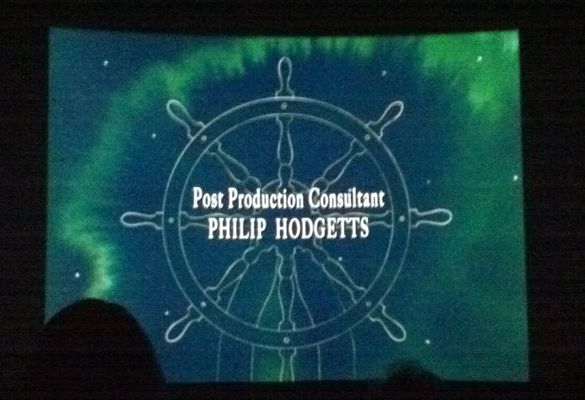
If you look very closely at the restoration credits box at the bottom, you can see my credit as "Post Production Restoration Consultant".


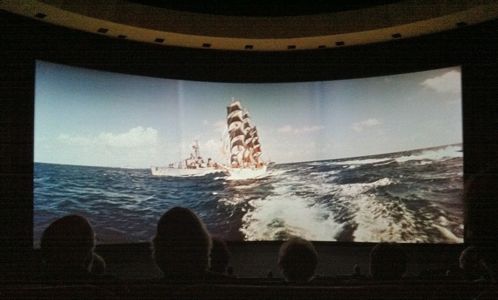
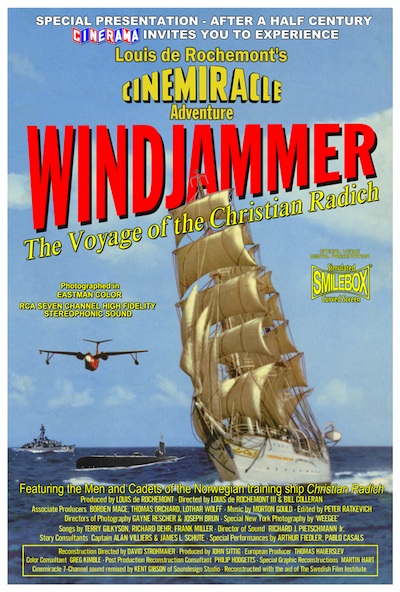
Was at the Cinerama Dome to view the restored print of Windjammer and it occurred to me that there’s a lot of commonality between Cinerama (the three camera/three projector widescreen of the late 50’s and early 60’s) and 3D.

But first, a little back story. I have been consulting on the restoration of Windjammer as a technical consultant: making sure that the maximum amount of quality we could get from the print was available for the restoration.

I also advised on tools for the job. The Foundry’s Furnace Core featured prominently as did Adobe After Effects and Final Cut Pro. I also helped set workflow and kept everything running smoothly.

Unfortunately the complete negatives for the three panels of Windjammer are not complete. In fact the only place the entire movie is available was in a badly faded composite 35mm Anamorphic print.

You can see the trailer, remastering process and how we telecined (Oh look, it’s me in the telecine bay) online, but today was the only time it’s likely to be shown in a Cinerama Theater.

David Strohmaier and Greg Kimble did a great job on the restoration – all on Macs with Final Cut Pro and After Effects.

Now this wasn’t a full reconstruction so we worked in HD – 1080p24 – but used the full height during telecine and correction so we didn’t waste any signal area with black. For the DVD, due in early 2011, the aspect ratio is corrected and a “smile box” (TM) treatment to simulate the surround nature of Cinerama.

Because we were working in HD, I was pleasantly impressed by how great it looked at Cinerama size on the Arclight Theater’s Dome Cinema in Hollywood. (Trivia point: the Dome was built for Cinerama it never showed Cinerama until this decade.)

Another point of interest was that the whole show ran off an AJA KiPro as it did in Bradford earlier in the year, and Europe last month. Each Act of the 140+ minute show was contained on one drive pack. Can’t recommend the KiPro highly enough.

So, there we were enjoying the story (and restoration work) and it occurred to me that there were strong similarities in cinematic style between “made for 3D” 3D and Cinerama.


Before restoration, this composite image was washed out, lacking in saturation and very shifted toward red/magenta.
Before restoration, this shot was desaturated, shifted to red and blown out. (From the screening Sep 05, 2010.)


Cinerama seams together three projectors into a very wide screen view that was the precursor of modern widescreen. The very wide lens angles favor the big, panoramic shots and shots that are held rather than rapid cutting. Within this frame the viewer’s eyes are free to wander across multiple areas of interest within the frame.

Similarly, my experience of “made for 3D” 3D movies is that it is most successful when shots are held a little bit longer because each time a 3D movie makes a cut, it takes the audience out of the action for a moment while we re-orient ourselves in space. (Unfortunately there’s nothing analogous to that in the Human Visual System, unlike traditional 2D cutting, which mimics the Human Visual System – eyes and brain together .)

Both Cinerama and 3D work best (in my humble opinion) when the action is allowed to unfold within the frame, rather than the more fluid camera of less grand 2D formats or 3D.

Since 3D had its last heyday around the same time as Cinerama, maybe everything old is new again? Digital Cinerama anyone? (How will we sync three KiPros?)

And one little vanity shot since today was the first (and likely last) time I’ve had my credit up on the big screen in a real cinema:


My first (and likely last) big screen credit moment. 9/5/10
My first, and likely last, big screen projected credit.


Categories
Item of Interest

Is Flash on Android “Shockingly Bad” OR

Is Flash on Android “Shockingly Bad” or “Shockingly Great?” http://bit.ly/cXleXP Better results surface with more testing.

Michael Panzer, a reader from Germany, for instance, posted a video of his experience with Flash video on his Galaxy S. Unlike Kevin’s experience, movie trailers from Metacafe — including the HD trailer of Alpha and Omega — loaded just fine, despite a few stutters along the way, as did the trailer for the latest Resident Evil film, also in HD. However, Panzer didn’t record his attempt to watch videos on ABC.com or Fox.com, which were the sites that gave Kevin the most trouble.

It may be certain sites that cause it more problems than others.

Categories
Item of Interest

Episode 7 of The Terence and Philip Show

Episode 7 of The Terence and Philip Show is now available for comment and discussion. http://bit.ly/9DIcN1

In this week’s show, Terence and Philip discuss the politics of Industry Award Shows. Why should we care? Is there an alternative or does there even need to be one? If not awards, how do we judge skills, with a divergence down memory lane to the “Gunsmoke” footage and similar exercises. How do we judge the work of an editor? And only one reference to the “NLE from Apple”

Categories
Distribution Item of Interest

Piracy Is Promotion, Says CEO of Porn Multinational

Piracy Is Promotion, Says CEO of Porn Multinational http://bit.ly/aAqEFN

Not your usual CEO approach to piracy but one that is consistent with his conclusion:

Milton believes that entertainment companies should look beyond piracy, and explore alternatives business models as the battle against piracy is one that can’t be won.

“I think it’s a lost battle,” Milton said, adding: “I look at my own kids, because that’s the best way to know where the market is going. It doesn’t matter if I tell them that it is illegal to download. As soon as they close the door to their room, they download.”

“They are not afraid of someone who’s tracking their IP-address. They just don’t care, Milton said. “It’s a new world and we have to accept it.”

So instead of following the RIAA and MPAA down useless fan-tagonistic approaches he suggests:

In the video Milton says that his company will focus more on selling the ‘private lifestyle’ which includes luxurious vacations with an adult theme, and toys and tools that may come in handy while reenacting pirated videos.

With slow progress on human cloning and the 3D-printer, Milton’s bet on selling the sex ‘experience’ rather than videos seems to be a safe one for now.

Categories
Distribution Item of Interest

Rather Than A Record Label, How about a Musical Affinity Group?

Rather Than A Record Label, How About A Musical Affinity Group? http://bit.ly/bKibhF

If the Record Labels have a future maybe it needs to be a different future?

I was reminded of this a bit, two years ago, when Topspin’s CEO, Ian Rogers, penned an open letter to Guy Hands, the head of (struggling) EMI, suggesting that rather than think of itself as a “record label” focused on promotion and distribution (two things that are easier and cheaper than ever before), it could instead focus on being the smart filter for music listeners today, struggling to find the music they love amidst so much musical abundance in the world. The suggestion was to take some of the key, iconic, bands under the EMI roof, and put them under affinity-based “mini-labels” with other less well known bands, that would appeal to people who liked the more well known band. It seemed like a great idea, which, of course, EMI has not done.

Then again, isn’t Apple’s new Ping in iTunes heading in that direction, but with a more social component that doesn’t really require the record labels?

Categories
Assisted Editing Interesting Technology Metadata Video Technology

prEdit reaches 1.1 after first month

I probably have mentioned that we’re working on a documentary about Bob Muravez/Floyd Lippencotte Jnr in part because we wanted demo footage we “owned” (so we could make tutorials available down the line) but also because I wanted to try it in action on a practical job.

I start work in prEdit shortly – nearly started today, so it looks like Friday now – but already we discovered some ideas that have now been implemented in the 1.1. release.

Along the way I’ve learnt a lot about how well (or not) Adobe’s Speech Analysis works. (Short answer: it can be very, very good, or it can be pretty disappointing.) As prEdit is really designed to be used with transcriptions I also tested the Adobe Story > OnLocation > Premiere method, which always worked.

Well, from that workflow it became obvious that speakers (Interviewer, Subject) were correctly identified so wouldn’t it be nice if prEdit automatically subclipped on speaker changes. And now it does.

If multiple speakers have been identified in a text transcript, prEdit will create a new subclip on import at each change of speaker

It also became obvious as I was planning my workflow that we needed a way to add new material to an existing prEdit project, and to be able to access the work from historic projects to add to a new one.

New Copy Clips… button so you can copy clips from one prEdit project to another open project

Now that I’m dealing with longer interviews than when we tested, I needed search in the Transcript view.

Search popup menu added to Transcript View.

That led to one problem: adding metadata to multiple subclips at a time. Previously I’d advocated adding common metadata to the clip before subclipping in prEdit (by simply adding returns to the transcript) but if it comes in already split into speakers, that wasn’t going to work!

Logging Information and Comments can be added for multiple selected subclips if the field doesn’t already have an entry for any of the selected subclips

Because you never, ever want to run the risk of over-writing work ready done.

And some nice enhancements:

Faster creation of thumbnails

Bugfix for Good checkbox in Story View

prEdit 1.1 is now available. Check for updates from within the App itself. And if you work in documentary, you should have checked it out already.

Categories
Item of Interest Monetizing The Business of Production

Does Steven Levitan Also Want a cut of every TV Sale?

Does Steven Levitan Also Want A Cut Every Time You Buy A TV? http://bit.ly/cpJzpK

Ahead of a Hulu IPO Steven Levitan – a well respected and talented writer/producer – claimed that he and other content creators should get a cut of Hulu’s IPO. Funny I didn’t realize he got a cut of ABC’s profits when he provides them with content. Oh right, he doesn’t, but he’s effectively looking for the same thing.

What I found interesting though is this part of the article:

The more he argues, the deeper a hole Levitan seems to dig in his reasoning. He complains that if we don’t figure out a way to make his shows profitable, the only thing left to watch will be “sneezing pandas.” This is a version of the movie industry’s “$200 million myth.” It’s the “well, it costs me $x to make this, so if we can’t make that back, no one else could possibly make quality content for less.” It’s incredibly elitist and wrong. Not only is there good content made for less money out there (beyond the sneezing pandas), but if there’s really demand for his shows (and there appears to be), then there are smart business models you can pursue that don’t involve pissing off your fans or demanding an equity pay out from a company you didn’t actually invest in.

The emphasis is mine.

Categories
Apple Media Consumption Monetizing

Why 99c rentals are still too expensive

Apple’s new Apple TV and 99c TV show rentals are definitely a step in the right direction but the cost is ridiculous.

Peak, premium, the best there is, content on major networks gets between 25 and 65c per viewer per show in revenue. That’s the top, highest end. So yes, the top of the top could conceivably rent for 99c, but the lesser shows? No way I’m spending 99c to watch a Daily Show (10 to 25c tops).

Last October I did a detailed tracking of what we watched and priced it out in the Apple store of the day. We watched that month an average of an hour and a half a day and the “best price” (taking advantage of Season Pass discounts) was $112.55. With rentals that would drop to $85.14.

Now, Dish (or Cable or whatever) 100 channel plan is around $65 a month, but I can watch up to 640 hours in that month (or record it for time shifted viewing). That’s about 10c an hour, not $1 per show. Of course, no-one can watch or record 640 hours in a month. The American Average is 135 hours a month of viewing (depending on who you ask, this is the conservative, lower end) or around 43c per hour, not per show.

An HBO subscription, with 32 hours of original programming a month equates to about 31c per hour, not show.

Part of what I find egregious about Apple’s new pricing is that it’s 99c for a 22 minute show, 99c for a 44 minute show or 99c for an extended episode. No allowance for the fact that some shows are worth more than others.

I’d cheerfully pay 10c per Daily Show. If I did and Apple took their 35%, that’s roughly 6.5c per show per viewer by 2 million viewers or $130,000 revenue per episode against approximately $35,000 per episode in cost. That’s an improved deal for the Daily Show producers and a fair deal for viewers.  The absolute maximum I’d pay for a Daily Show is 25c and at that I think it’s a rip off.

Friday Night Lights, Mad Men, Burn Notice et al. I’d be happy to pay 50-65c but not 99c. Even at that these shows would be better off with this revenue model.

So, nice try Apple but until watching 4-5 hours a day, every day for a month has to be under $60 a month in total for it to be considered a cable replacement. Of course, this may not be Apple’s doing at all. It’s much more likely that the content owners have some ridiculously outsize estimate of the “value” of their content.

Categories
Item of Interest

Apple live stream – http streaming can go full screen

Apple live stream – http streaming – can go full screen.

Â