Monthly ArchiveFebruary 2009
Item of Interest & Random Thought Philip on February 22nd, 2009
What if “video” is just another form of literacy?
A long, long time ago (at least 10-12 years back) I started to hypothesize that we were heading for a generation for whom “video production” was just another form of literacy. Eventually the majority of people will have some degree of production skills as a part of their work.
It’s not as wacky idea as it seems. Go back a couple of years and you’ll find only a very small elite had the tools and skills to read and write (the classic definition of literacy). Pre Gutenberg it was a very elite skill and definitely not something you’d want the unwashed masses doing. The ability to read and write was a defining skill that separated the “educated leadership” from the masses of followers. The Catholic Church continued the elitist practice of a Latin Mass, in part to continue a “mystique” about the ceremony because only the priesthood understood Latin.
Literacy, or the lack of it, is a way of controlling a population. Then we had the Industrial Era and (relatively) cheap printing and slowly more and more people acquired the ability to read and write. It was no longer “special” and no longer a guarantee of income or career that it once was. Being able to read or write no longer defined the position.
Now that about 90% of the Western population reads and writes acceptably, we see how important it is to all types of jobs. There are very few jobs where you could fulfill the function of the job without knowing how to read and write.

For some people, their ability to write is their primary skill. Novelists, playwrights, screenplay writers, etc all primarily use their writing skills to make a living. But nearly every business person writes reports or writes PowerPoint presentations. People fill out forms for a living, or correct filled out forms and enter them into an electronic storage system. People (used to) write classified ads before Craigslist came along.
If you think about it, there are very few places where you could survive without knowing how to read and write: to be literate.
As I predicted, I think we’ve seen video production and post production skills move from being niche knowledge areas, accessed only by the High Priests (and occasional Priestess) of the Television and Film businesses. The technology was hard to work with, bulky, needed a lot of power and a lot of light. There were genius engineers who kept cameras aligned within themselves and with other cameras.
Today’s young production crews don’t have the joy of recalling the pain of aligning the three tubes in a camera to each other; or the “fun” of 4-Field (NTSC) or 8-Field (PAL) frame sequence in editing. Personally I’m glad those days have gone, along with linear editing and all that went with it.
Now, like the advent of cheap tools in reading and writing like the ball-point pen, electric typewriters and eventually laser printers, means that anyone who has a reason to write, can do so.
That’s where we are, or are heading, for the very broad field of ‘video production and post production’. It’s not the job any more, it’s just a set of tools almost everyone uses in their life somewhere.

But like classic literacy, only very few will make it their primary means of earning an income. Instead, those skills will be common to most people. Some will use the same basic skills to add some video to a news website along with the article, some will use it to record and present events, some will use it only personally, some will have to use it as part of their work and some will make it the primary means of income generation.
Instead of the latter being the only way to exercise these skills there are now many, many more ways to exercise them. As I say in my seminars on the subject, because of the advent of low cost, high quality production tools, anyone who has an idea and the drive can produce their project.
I don’t think “high end” production is going to go away, any more than widespread literacy forced the novelist out of business. 150 years later there are still highly successful novelists, just not a whole lot. There are a whole lot more (thousands of times more) who use their literacy skills as part of the way they make their living.
And that’s where we’re heading: to a world where there’s nothing special about video production skills, per sé, just different ways of leveraging those skills into an income stream in association with other skills.

Business & Marketing Philip on February 20th, 2009
How to build your post production business
The number one thing you should do, and do it now
Contact your clients
Call them, write to them, send an email – whatever way you contact your past and present customers, contact them. Don’t commiserate about how bad the economy is. Don’t complain and moan how quiet business is, simply ask if there’s anything you can do to help. As Seth Godin says contact them along these lines:

“I know that times might be tough for you. Is there anything I can do to pitch in and help?”
Listen, and then do it. Even for nothing if it’s a small thing that you can do to help. Even the fact that you’re listening and asking will score you some karma points for the future.
If you get a meeting
If, as a result of asking, one of your clients wants to “talk” in a meeting, remember that there’s nothing different in this economic climate than any other: you need to add more value to the client’s business than you cost.
Know your client
Before the meeting learn as much as you can about the client. Feel free to share your “war stories” but be very careful to keep the meeting about the client. Learn as much as you can about their business: read through their website and spend a few minutes googling the client company and contacts.
Know what you don’t know
Even if you’re well researched, arrive with a curious attitude and lots of questions. People instinctively like people who are interested in them.
Keep your eyes and ears open for any little clues in your client group during a presentation or the meeting. If you see a reaction among one or more people to the point you’re discussing, follow up on that point with a question to discover the client’s agenda on the subject. Being able to think on your feet and move toward the client’s need in the presentation shows that you listen and can be flexible – also desirable traits in a contractor.
All business is a people business, but production and post more so than most.
You won’t be the only one
You can almost guarantee that you won’t be the only person contacting, or presenting to, your clients. Every other production or post production business in your area will likely be calling, as well as any new entrant to the business who might be prepared to undercut to get started.
Whether or not you get the meeting or the job will depend on the sort of relationship you’ve had with your client in the past, and how well you can articulate to the client, the value that you bring in specific terms.
Most of your competition are going into these meetings focused on their need to stay in business. No doubt that’s in your mind to, but it can never be the focus of your presentation. There is only one thing the client is interested in: how you’re going to help them make more money. Keep that clearly in mind and the total focus of what you present.
Also, be very clear what business you are in. It probably isn’t the one you think it is.
Random Thought Philip on February 17th, 2009
What’s a hat stand?
As NBC have pretty much ruined the nascent term “Preditor” (a combination of Producer and Editor) I’m coining the term “Hat stand” as a way of describing people like myself that “wear many hats”. People who are adept at many facets of production: producing and editing but also the very large, and increasing, group of people who not only write, but edit and do graphics. Or those who are editors and awesome motion graphic designers.
There are a lot of mult-talented, multi-faceted people and I’ve never known how to describe what I do. So from now on, when asked “What do you do”, I’m going to reply “I’m a hat stand”. I’ll still have to describe that I do a whole bunch of different things (from writing this blog to business plans, editing, encoding, some graphic design, marketing, etc, etc) but at least there’ll be a bit of fun while we talk.
The term first came up at an Adobe event in LA last week, when thinking about the Olsen Brothers who between them wear all the hats needed in production. That’s a lot of hat stand!
Business & Marketing & Item of Interest Philip on February 17th, 2009
Who gets to be a production professional?
I was talking with Shane Ross about his new podcast and he said the first topic was, basically about Final Cut Pro and Media Composer because “they were all that professional editors used”. (My version of Shane’s words.) I admit, I had a fairly strong reaction simply because the world of production that Shane (and his guests on the first podcast) work in is such a small part of the entirety of the production space, that it does the whole industry a disservice.
Similarly I went very close to offending my good friend Andrew Balis when we were recording some interviews for Rick Young’s MacVideo.tv videos and I called him a “film snob”. In both cases I certainly did not mean to offend, and in Andrew’s case I was merely mean to imply that he had quality criteria that were somewhat higher than most. Andrew mostly works in film and television, as does Shane and it’s easy to believe, when you work in that area of “the business” to think that’s it. And 25 years ago you’d have been close to right, but not any more.
At the high end – Thompon’s Viper; Sony’s F900, F950 and F23; etc – there is a relatively small pool of people working with these formats to make “Television” and “Movies”. Let’s be generous and say there are 100,000 people working in post production for film, network or cable/satellite Television worldwide. (There are about 6000 members of the US Screen Editor’s Guild and only 104,000 across IATSE, most of whom aren’t working as editors.)
Compared with that 100,000 there are at least 1.25 million unique registered Final Cut Pro owners (and probably double that in “not registered” versions, but we won’t go there). There are probably 200,000 Media Composer units in use (some going back to OS 9) and well over 500,000 seats of Premiere Pro (probably more), at least 300,000 seats of Sony Vegas and approximately 75,000 Avid Liquid users. Feel free to correct my numbers in the comments if you have better information (or email me directly).
So, somewhere around 100,000 “professional editors” (by a certain reckoning) and yet there have been over 2.3 million seats of editing software sold. Professional editing software: this does not count iMovie, Windows Movie Maker or Pinnacle’s various consumer editing applications.
By Shane’s ‘definition’ professional editors make up less than 5% of the users of all editing software sold. Even if say that every owner of FCP is also an owner of Media Composer – there would be overlap but not complete – and the total is 2 million. That’s still just on 5% of all the professional editing software sold that’s being used by “professionals”. It does not compute!
There are no longer hard barriers between “the broadcast and film” business and the wider world of video production and post production like there may have been 30 years ago. Production quality from affordable tools has skyrocketed in that time and HD quality way beyond the best broadcast cameras of 20 years ago costs less than $5K US. There’s very high quality work being done for Trade shows or for educational video. There are those using RED One cameras for web video! Where are the lines to be drawn?
For me, if you get paid by your customers to edit (or produce) video and your customers are happy, pay their bills and come back for more work, then you’re a professional editor. (That is, of course, the inarguable definition of professional).
Professionalism also has undertones of quality and attention to detail that separates the pro from the amateur, and that certainly comes into it as well, but what has changed is that there is not just one market for quality. No longer a single standard.
I love that Shane, Andrew and their compatriots care deeply about quality, rejecting (if they can) “lesser” formats (like HDV or any long GOP acquisition) as lacking in quality. I also recognize that their world is a small part of the totality of production. I wish I could find the reference but I’m sure I’ve read that – based on dollars spent – what we think of as Broadcast Television and Film (IOW the entire industry of 30 years ago) is now around 15-20% of the dollars spent on “professional production”.
The old lines are gone. In coming days I’ll talk about Joss Wheedon “leaving television” and the implications of the failing distribution model, etc. Bottom line, things are changing and changing fast and there’s not really room to try and restrict “professional” editors to an exclusive club.
At the same time, I know what Shane is trying to define: there are different workflows and expectations of certain types of production – that he and Andrew work on – that are quite different from the workflows and expectations of corporate, event or other entertainment production. While the skill sets are different, I don’t see Shane’s compatriots as any more professional than the members of the Association of Video Professionals, WEVA (with more than 200,000 members); and the Digital Video Professionals Association. They’re all about maintaining high standards of production, post production and service appropriate for their customer base.
And here’s the thing. If those folk performed in the same way, at the same level and within the same restrictions as Shane’s friends and associates, they would not be doing the job they are being paid for and therefore, not professional.
Maybe we just need some new terminology!
Distribution & Media Consumption Philip on February 16th, 2009
How much will you pay to watch ads?
Of course, if I ask the question like that “How much will you pay to watch ads?” most people would immediately respond with “nothing” or something close to it. However most people already pay to watch ads on cable television. You pay the cable company a fee but the majority of channels you can get without paying another, additional fee, all have advertising.
In some of my presentations on the subject of the future of Television, I like to point out that the advent of cable is when Americans started paying twice for Television: once with your attention to the advertising (which was supposed to be enough) and again with cash to your cable company for the privilege of a clean signal and no outdoor antenna.
At least with the cable company you know what you’re going to be charged ahead of the game and you’re not charged specifically for each commercial you watch. You will if those same companies move to capped or tiered bandwidth on your Internet connection. With caps along the lines so far proposed by Time Warner (50 GB a month) a couple of movies downloaded every week (or the equivalent TV watched on Hulu, or YouTube et al.) will soon put you up to that limit. Then, every single advertisement you’re forced to watch will be adding to your bandwidth bill directly.
Capped bandwidth is not necessary and will cause a crippling effect on the growth of video on the Internet (of all kinds). It’s not for nothing that Australia – with very low bandwidth caps – is a broadband backwater in international terms, even compared with the USA. To meet the demand, the cable companies need to invest in their infrastructure just like any other business. If they don’t, let’s find an alternative because the only thing stopping a truly competitive business is the lack of competition.
In most places there is, at best, a duopoly of Internet suppliers: a cable company and (if you’re close enough) a telecommunication (a.k.a. phone) company. Duopolies get comfortable and start to think they’re running the business for themselves and “customers” are a rather unavoidable nuisance. Throw WiMax, 4G cellular or other technologies into the mix and we’ll have real competition. With real competition, all need for a discussion about “Network Neutrality” will evaporate: none of the competitive organizations can afford to be the only one throttling their network.
Without real competition, start to think about paying for watching ads – not only at SuperBowl time but all year round. Ads you don’t care about for products you’ll never be interested in buying, but that you’ll pay for anyway.
Presentations Philip on February 14th, 2009
Pizza and Post with Philip Hodgetts
In case anyone is interested I’ll be speaking at Video Symphony’s “Pizza and Post” night on Feb 24th. Topic is “From producer/editor to changing the fundamentals of documentary post production in 9 years, two countries and a heck of a lot of innovation.”
Video Symphony are in Burbank, on Magnolia near the Burbank Town Center mall (just off 3rd street). The event is free as is parking. More details in their California Video Production blog.
Business & Marketing & Distribution Philip on February 6th, 2009
How is new media being funded?
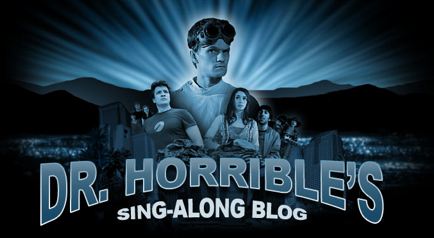
One of the more interesting experiments that came out of frustrated creativity during the Writer’s Strike was Joss Whedon’s Dr Horrible’s Singalong Blog: A three-part musical with some very well known actors in the lead roles.

Until an interview with Knowledge @ Wharton we didn’t have a lot of the financial detail, other than it was done with a SAG low budget or experimental contract.
There are a couple of interesting observations in the article. The one that immediately caught my “I don’t believe advertising can support new media” prejudice was this comment about where the money came from:
iTunes has been a great boon for us. And the DVD has done quite well — although I’d love to bump that up more. Streamed [online video] with advertising is probably the smallest revenue. Whether that’s a viable monetization scheme … is the question. In some ways it acts as an advertisement and in some ways it might be pulling people away from bothering to download it or to buy the DVD.
What’s funny here is that Whedon’s experience was that the “free” (with advertising support) was useful in promoting the paid downloads and DVD – people paying for media! That’s the complete reverse of the more theoretical positions held by many that the content will be free but some other income stream will “subsidize it” (like advertising has for the last 50-60 years).
It’s also satisfying to know that even when it was being streamed on Hulu with advertising – horribly irrelevant and repetitive advertising – it was the best selling download on iTunes. The pay-for-download version was being purchased through the iTunes store even though there was a free alternative (if you like to see the same ad over and over again).
The budget was something over $200,000, which is more than had been previously guessed, but total revenue has now been “more than” double that. Even considering that a lot of the income over $200,000 went to actors and department heads who had worked for nothing, that’s still not too bad overall. It also means the production budget is within the range for similar content – with similar level stars – as a musical would for cable. For ease of the Math, let’s say the total budget was $350,000.
Given that the range for network shows is 25-65c per viewer/per show from advertising revenue and cable rates are lower, let’s be generous and go with the 25c per view figure. At that rate, the show would have had to have enjoyed a cable audience of 1.5 million to have covered its costs.
If we were to be more realistic about the advertising rate – they were network rates after all – the audience would have needed to be around 2 million (cumulative) to have funded the show.
Cable can certainly get the numbers: Monk, The Closer and Burn Notice all enjoying audiences of over 5 million on USA and TNT. Shows around the 2 million audience are The Daily Show, Real Housewives of OC, and Intervention. Very few musicals and not much drama/comedy content!
The one thing we don’t know is what the total audience numbers are across iTunes, Hulu, other online outlets, and the DVD release, but we do know that $6.50 (their share after the reported figure Apple take) for a 45 minute show is better revenue than any other model has provided on a “per minute” basis. Sure, they added additional content so that people who might have already seen the show on Hulu or have it from iTunes still have a reason to buy the DVD. (Directly sold DVDs could bring in a higher per viewer revenue, but not if there’s a distributor or Amazon CreateSpace in the middle.)
Of course, I thought it would have been a show that would have been perfect through Open TV Network. All the benefit of having people delivered each episode as it comes out, with the ability to make a small charge for each download. 15c an episode would have bought in more than a cable showing would and definitely be worth it. Plus when there were DVD Extras they could have been offered to existing fans via their feeds.
Regardless of how, I believe it’s clear that some part of “new media” has to disintermediate the conversation between viewer and producer, without another editor in the middle. And that’s going to require a little direct revenue. We tip for service, why not pay for entertainment?